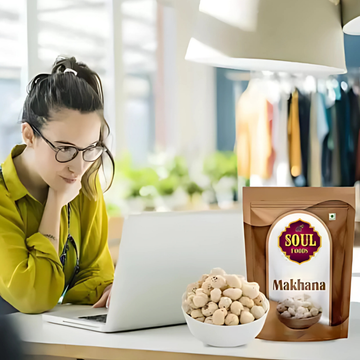
Walk down the snack aisle and "makhana" all looks the same in the photo — puffed, pale, and vaguely lotus-shaped. But if you've ever opened two bags side by side, you already know the truth: not all makhana is created equal. Grade matters more than almost anything else in this product, and it's the single biggest reason some makhana tastes like styrofoam while other batches taste like something worth snacking on.
At Soul Foods, we source jumbo-grade raw makhana directly from Darbhanga, Bihar — the growing region most serious makhana farmers consider the gold standard. Here's what that actually means, and how you can tell the good stuff from the filler.
What "Jumbo" Actually Means
Makhana — also called fox nuts or lotus seeds — is graded by size after it's harvested, dried, roasted, and hand-popped. The bigger and more uniform the popped seed, the higher the grade. Industry grading typically runs from smaller, irregular pieces up through mid-size, and finally to jumbo and king-size grades, which are the largest, roundest, most evenly popped seeds in the batch.
Size isn't just cosmetic. Jumbo seeds pop more completely, which means a lighter, airier texture and far less of the dense, chewy centre you get in lower grades. That's the difference between a snack that crunches cleanly and one that leaves you chewing on something closer to a pebble.
Why the Grade Is Worth Paying For
- Better texture. Jumbo makhana pops more fully, so it's lighter and crunchier — not dense or leathery.
- Less waste. Lower grades come with more broken pieces and "makhana dust" at the bottom of the bag, which you're paying for but can't really eat.
- More consistent roasting. Uniform size means every piece roasts evenly, instead of some pieces burning while others stay underdone.
- Better mouthfeel per bite. Bigger, fuller puffs mean more snack and less shell in every handful.
How to Spot the Real Thing
Whether you're buying from us or anyone else, here's what to actually look for in the bag:
- Colour. Good makhana is a soft, creamy off-white — not stark bleached-white (often a sign of over-processing) and not yellowed or dull grey (a sign of age or poor drying).
- Size consistency. Look for pieces that are roughly the same size throughout the bag. A mix of tiny fragments and full puffs usually means lower-grade sorting, or that jumbo has been cut with cheaper grades.
- Minimal dust and broken bits. Tip a handful into your palm. If there's a layer of crumbs and shell fragments at the bottom, that's a lower grade — or a bag that's been sitting too long.
- The crunch test. Real jumbo makhana snaps cleanly and lightly. If it feels dense, chewy, or slightly rubbery, it likely wasn't roasted properly or wasn't jumbo grade to begin with.
- Smell. Fresh makhana has a faint, nutty, toasty smell. Anything musty, stale, or oily has likely been sitting around — or roasted in low-quality oil.
Our Approach
We built Soul Foods around one rule: if it doesn't need to be there, it doesn't go in. That starts with the seed itself. We source jumbo-grade raw makhana and keep the ingredient list exactly what it should be — nothing added, nothing hidden. No fillers, no bulking with lower grades, no shortcuts on the roast.
It's a simple snack. We'd just rather it be a genuinely good one.
Curious to taste the difference for yourself? Shop our raw makhana and see what jumbo grade is supposed to feel like.